
If your local business is not showing up on Google Maps or in the local pack, the problem might not be your reviews or keywords. It could be something simpler – inconsistent citations.
A citation is any mention of your business online that includes your Name, Address, and Phone number (NAP). When this information does not match across platforms, Google sees mixed signals about your business. That confusion can hurt your local SEO rankings.
Here is the shocking part, according to BrightLocal, over 60% of customers lose trust in a business if they find incorrect contact details. That means a wrong phone number or outdated address can cost you both leads and credibility.
I have seen this issue many times while auditing local businesses. One listing says “Main St.” while another says “Main Street.” A small detail, but to Google, they are not the same location. This inconsistency weakens your business authority online.
The good news is that you can fix it.
In this guide, I will show you how to audit, correct, and maintain consistent citations step by step. By the end, you will know exactly how to make your business information consistent everywhere and how that helps your local SEO rankings climb again.
What Are Citations in Local SEO?
Local Citations are simple but powerful. They are mentions of your business information across the internet. Each time your Name, Address, and Phone number (NAP) appear on another website, that counts as a citation.
Search engines like Google use these mentions to confirm that your business is real, active, and trustworthy. When your NAP is consistent everywhere, Google gains confidence in your business data. That trust helps your local rankings improve.
There are two main types of citations:
1. Structured Citations
These appear on business directories or listing platforms that follow a fixed format. Examples include:
- Google Business Profile
- Yelp
- Bing Places
- Apple Maps
Each of these sites lists your business name, address, and contact details in a structured layout.
2. Unstructured Citations
These are casual mentions of your business on websites, blogs, news articles, or social media posts. For example, when a local blog writes, “We love the pizza at Tony’s Italian Kitchen in Chicago,” that mention is an unstructured citation.
Both types matter. Structured citations build your foundation, while unstructured ones add credibility and local relevance. The key is to make sure the details stay identical across all of them. Even small differences can create confusion for search engines.
More Details: Structured vs. Unstructured Citations: What’s the Difference?
Why Citation Consistency Matters
Google wants to show accurate information. To do that, it compares your business details across the web. When your Name, Address, and Phone number (NAP) appear the same everywhere, it signals that your business is legitimate and reliable.
Think of it like this, Google acts as a digital fact-checker. If every directory lists the same NAP, Google feels confident showing your business in search results. But when details do not match, Google becomes unsure. That uncertainty can lower your visibility in local results.
For example, imagine your restaurant is listed as:
- Tony’s Italian Kitchen at 123 Main St., Chicago, IL on Yelp
- Tonys Italian Kitchen at 123 Main Street, Chicago on Facebook
- Tony’s Pizza Kitchen with a different phone number on Apple Maps
To a human, those might seem like small differences. To Google, they look like three separate businesses. This weakens your authority and trust score, which can lead to lower rankings in the local pack and fewer calls from new customers.
Consistency does more than please search engines. It also builds trust with real people. When customers see the same details across every platform, they feel confident they are calling or visiting the right place.
How Inconsistent Citations Hurt Your Local Rankings
Inconsistent citations can quietly damage your local SEO performance. When your business details vary from one platform to another, both search engines and potential customers lose confidence in your information. Here is how it affects your visibility and reputation.
1. Reduced Trust
Google’s job is to deliver accurate results. When it finds mismatched NAP data, it questions which version is correct. That doubt lowers your trust score, which is part of Google’s local ranking signals. Fewer trusted signals mean less visibility in map results and local packs.
2. Lost Visibility
Local search rankings rely heavily on accuracy. If Google detects conflicting business data, it might exclude your listing from top local results. Even if you have positive reviews or strong backlinks, inconsistency can push your competitors ahead.
3. Customer Confusion
People often rely on local listings to make quick decisions. If your phone number, address, or name differs across sites, customers may call the wrong number or drive to the wrong location. That leads to frustration and lost business opportunities.
Example, A local plumbing company once listed itself as “QuickFix Plumbing” on Google, but “Quick Fix Plumbing LLC” on Yelp with an old address. Over time, their calls dropped, and their local ranking slipped from the top 3 to the second page. Once the listings were corrected and unified under one NAP format, rankings recovered within weeks.
Step 1: Audit Your Citations (Find All Inconsistencies)
Before fixing anything, you need to know what is wrong. Start by auditing all your current citations. The goal is to identify every place where your business details appear and note where the information is incorrect or outdated.
Manual Method:
- Search for your business name along with your city or phone number on Google.
- Check the top results and note each platform where your NAP appears.
- Visit major directories like Google Business Profile, Yelp, Facebook, Bing Places, Apple Maps, and Yellow Pages.
- Compare the information on each listing with your official business details.
Keep all results in a master spreadsheet. Create two columns labeled “Correct” and “Incorrect.” This makes it easy to track which listings need updates.
Step 2: Create a Master NAP Format
Once you know where inconsistencies exist, create a single, accurate version of your business information. This becomes your “master NAP format.”
Write down your:
- Official business name
- Complete and correct address
- Primary phone number
Keep the formatting identical everywhere. For example, if you write “Street,” do not shorten it to “St.” on some sites. Use one main phone number to avoid confusion with tracking numbers or old contact lines.
Save this version in a document or spreadsheet and use it as your reference when correcting or creating listings. This will help you stay consistent in the future.
Step 3: Fix Inconsistent Citations Manually
Now it is time to correct the errors you found during your audit. Start with the most important platforms, such as:
- Google Business Profile
- Yelp
- Bing Places
- Apple Maps
Log in to each profile and update your NAP details to match your master version. If you find duplicate or unclaimed listings, claim ownership before making edits. Some directories might not allow direct editing, so you may need to contact their support team.
After each fix, take a screenshot or note the date of correction. This helps track progress and confirm your updates if an issue comes up later.
Step 4: Automate Cleanup with Citation Management Tools
If you manage many listings, doing everything by hand can take time. That is where automation tools help.
Here are some trusted options:
- BrightLocal: Simple interface, ideal for auditing and updating citations in bulk.
- Moz Local: Automatically syncs business data across multiple directories.
- Whitespark: Great for local businesses that want to find new citation opportunities.
- Yext: Best for larger companies that need real-time updates across many sites.
Manual vs. Automated Updates
Manual fixes give you full control but require time and effort. Automated tools save hours and reduce the chance of missing smaller directories. The best approach is a mix of both manual for top platforms and automation for wide distribution.
Step 5: Monitor and Maintain NAP Consistency
Citation cleanup is not a one-time job. Even small business changes can create new inconsistencies over time.
To stay consistent:
- Review your listings every 3 to 6 months.
- Use tools or Google Alerts to track new mentions of your business.
- After any move, rebrand, or phone number change, recheck your top directories.
- Add Local Business schema markup to your website. This structured data helps search engines verify your NAP directly from your site.
Ongoing maintenance protects your rankings and keeps customers confident they are contacting the right business.
How Citation Consistency Impacts AI and Voice Search Visibility
AI is changing how people find local businesses. Tools like Google’s Search Generative Experience (SGE), ChatGPT, and voice assistants such as Siri and Alexa rely on verified data sources to answer local questions accurately.
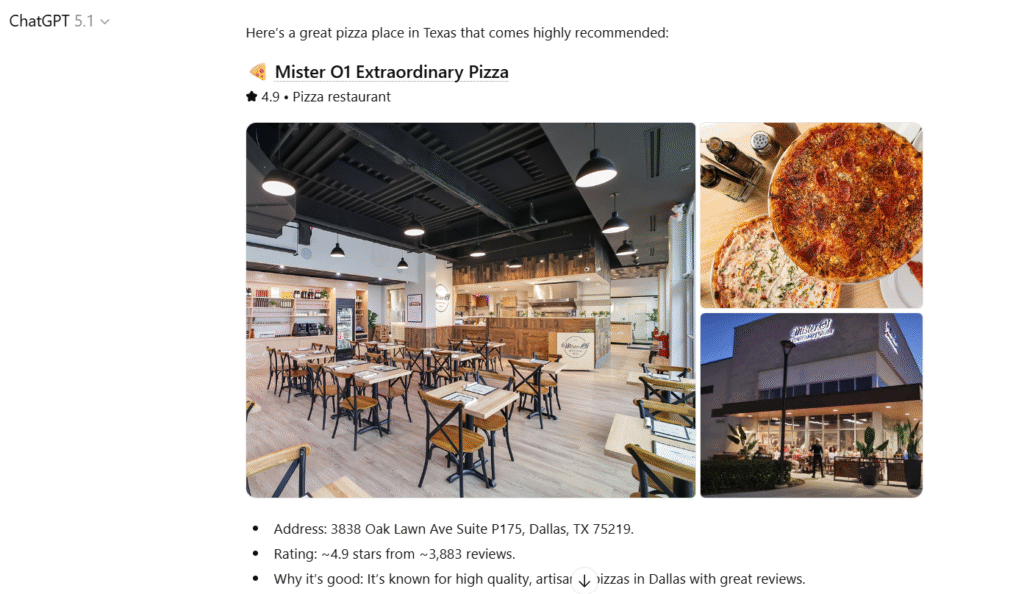
When someone asks, “Where is the best pizza near me?” these AI systems scan structured data, online citations, and business directories to decide which listings to show or mention. If your NAP details are inconsistent, AI tools may skip or misinterpret your business because they are not sure the information is reliable.
Consistent citations help AI systems connect all your business data correctly. Matching details across Google Business Profile, Yelp, Apple Maps, and other directories signal that your business is verified and trustworthy. That consistency increases your chances of appearing in AI-driven search results and voice responses.
This is not just about ranking today. Keeping your citations consistent also future-proofs your local SEO. As search engines and AI tools evolve, they will rely even more on structured and accurate business data to deliver results. By maintaining clean, consistent citations now, you ensure your business remains visible in every form of search traditional, AI-driven, and voice-based.
Common Citation Mistakes to Avoid
Fixing citations is simple, but many businesses make small mistakes that keep causing ranking issues. Here are the most common ones to watch out for.
- Mixing abbreviations: Using “St.” on one listing and “Street” on another may look harmless, but Google treats them as different addresses. Always choose one format and stick with it everywhere.
- Using call tracking numbers without schema setup: Call tracking can be useful, but if you list different numbers on different platforms, it creates confusion. If you use tracking numbers, add Local Business schema to your website so Google knows which number is your main contact.
- Forgetting about data aggregators: Sites like Data Axle, Neustar, and Foursquare distribute your business data to hundreds of smaller directories. If you only update your major profiles and ignore these sources, old or incorrect data can keep spreading.
- Ignoring duplicate listings: Duplicate listings create major trust issues for search engines. Always claim and remove duplicates before updating your main profile. Two listings for the same business can make Google unsure which one to show.
- Updating only Google Business Profile: Many business owners fix their Google profile but skip other platforms like Yelp or Facebook. Inconsistent data elsewhere still hurts rankings. Google compares multiple sources, not just its own.
Final Thoughts
Citation consistency may not sound exciting, but it can make or break your local SEO performance. Every time your Name, Address, and Phone number appear online, they send a trust signal to Google. When those signals match everywhere, your business gains credibility. When they do not, rankings and leads can quickly drop.
Consistency builds trust. It tells both Google and customers that your business is reliable and real. That trust turns into better visibility, more calls, and more visits from local customers.
FAQs
A citation is any online mention of your business that includes your Name, Address, and Phone number (NAP). It helps search engines confirm that your business is legitimate and located where you say it is. Consistent citations across the web strengthen your local SEO and improve visibility in map results.
The easiest way is to search for your business name and city on Google. Visit the top directories like Google Business Profile, Yelp, Bing Places, and Facebook to compare your information. You can also use tools such as BrightLocal, Moz Local, or Whitespark to scan for mismatches automatically.
Yes, you can. Start by creating a master NAP format, then manually update each listing on major platforms. This process takes time but works well for smaller businesses. Paid tools simply speed up the process and help manage larger sets of citations.
In most cases, you may see improvements within a few weeks after your updates are indexed. For competitive industries, it might take one to three months. The key is to remain consistent and monitor your listings regularly.
Ignoring inconsistencies can hurt your rankings and damage customer trust. Google might show your competitors instead, and customers could contact the wrong number or visit an outdated address. Keeping your citations consistent protects both your online visibility and your reputation.