Ever searched for “coffee shop near me” or “best dentist in [city]” and noticed a little map with three highlighted businesses right at the top of Google?
That’s the Google Local Pack and in 2026, it’s one of the most powerful ways to get new customers.
Why? Because nearly half of all Google searches have local intent, and users are far more likely to click on those top three listings than scroll further down.
For local businesses, showing up in the Local Pack means prime visibility, more phone calls, and more foot traffic.
Here are some key statistics that show how critical Local Pack SEO is:
- Approximately 46% of all Google searches have local intent meaning the user is looking for something nearby (a business, service, or address).
- When businesses appear in the top three spots of the Local Pack (the 3-Pack), they see around 93% more user actions (phone calls, direction requests, website clicks) than similar businesses further down or not listed in the Pack.
- In many studies, the Local 3-Pack listings get nearly 44% of clicks from users with local intent, compared to much less for organic or paid results in the same SERP.
In this guide, we’ll break down what the Google Local Pack is, how it works, and proven strategies to rank your business inside it.
What Is the Google Local Pack?
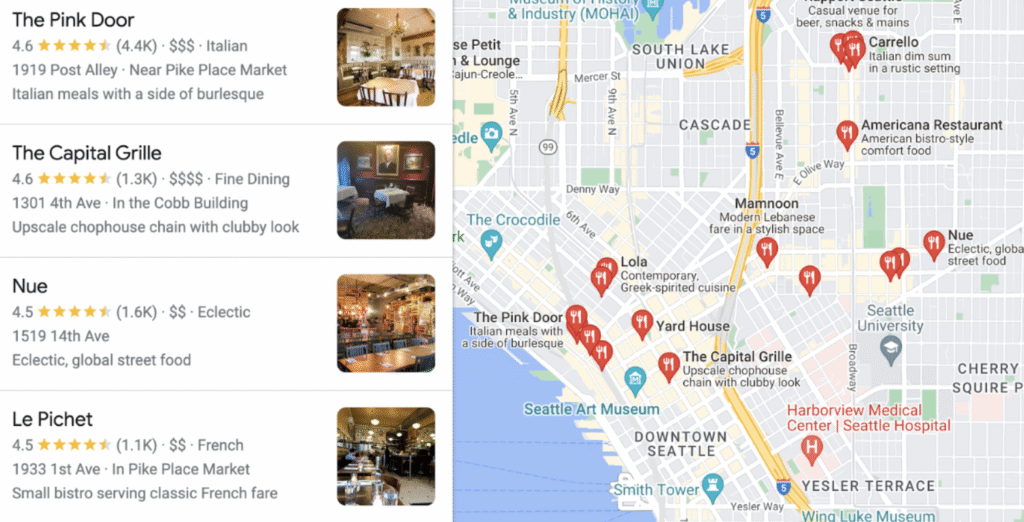
The Google Local Pack often called the Google Map Pack or Local 3-Pack is a special search feature that displays the top three local business listings relevant to a user’s query. It appears above the standard organic results and includes a map with pins, along with key business details like:
- Business name
- Star ratings & reviews
- Address & contact info
- Opening hours
- Links for website and directions
Here’s what a Local Pack looks like in Google Search 👇
Local Pack vs. Organic Listings vs. Paid Ads
It’s important to understand how the Local Pack differs from other parts of the search results page:
- Local Pack (Map Pack): Focuses on local intent and shows businesses near the searcher’s location. Appears with a small map and usually 3 results.
- Organic Listings: These are the regular website results ranked by Google’s algorithm. They appear below the Local Pack and are influenced by traditional SEO factors like content quality, backlinks, and authority.
- Paid Ads (Google Ads): These show at the very top or bottom of the SERP with a small “Ad” label. Unlike the Local Pack, they are sponsored placements and cost businesses each time someone clicks.
Why the Local Pack Matters for SEO
If you run a local business, getting into the Google Local Pack is like landing a billboard on the busiest street in town only better, because it’s shown exactly when people are ready to buy.
Here’s why the Local Pack is a game-changer for local SEO in 2026:
1. Unmatched Visibility
The Local Pack sits above traditional organic listings on both desktop and mobile. On smaller mobile screens, it often takes up the entire first view, meaning users see Local Pack results before anything else.
2. Traffic and Conversions
Studies show that nearly 44% of all clicks on local intent searches go to Local Pack results. Even more importantly, users interacting with these listings are high-intent searchers they’re looking to call, get directions, or make a purchase right now.
3. Built-In Trust Signals
Each listing shows star ratings, number of reviews, and business details at a glance. This provides instant credibility, making users more likely to choose a business with strong ratings over a competitor hidden further down in organic results.
4. Captures Commercial Intent Searches
Searches like “dentist near me,” “pizza open now,” or “best plumber in [city]” almost always trigger a Local Pack. These are buy-ready moments people aren’t just browsing; they’re ready to take action. Ranking here means tapping directly into that demand.
How Google Determines Local Pack Rankings
Unlike traditional SEO where backlinks and content play the biggest roles, the Google Local Pack uses its own set of ranking factors designed for local intent searches. Google has confirmed three core signals: Proximity, Relevance, and Prominence.
Proximity (Where the user is)
Google prioritizes businesses closest to the searcher’s location. For example, if two coffee shops are equally relevant, the one a block away is more likely to appear in the Local Pack than one across town. Proximity is especially strong for “near me” searches or mobile searches where Google automatically detects location.
Relevance (Does the listing match the query?)
Relevance is about how well a business profile matches what someone is searching for. Optimized Google Business Profile (GBP) categories, services, and keywords help Google understand whether your business is a good fit for the query (e.g., “emergency plumber” vs. just “plumber”).
Prominence (How well-known & trusted is the business?)
Prominence measures a business’s overall authority and reputation. Google looks at:
- Review count and ratings
- Citations and directory mentions
- Local backlinks
- Overall brand presence across the web
A restaurant with hundreds of 5-star reviews and press mentions is more likely to appear in the Local Pack than a new competitor with little online presence.
Role of Search Intent
Google displays the Local Pack primarily when it detects local intent queries that suggest a need for nearby results. This includes:
- Explicit local terms: “dentist in New York”
- Implicit intent: “pizza delivery” (Google assumes you want local options)
- “Near me” queries: “coffee shop near me”
Personalization Factors
Google also tailors Local Pack results based on user context:
- Device type (mobile vs desktop mobile often favors closer businesses)
- Search history (if you frequently visit or search for a brand, it may appear higher)
- Real-time location (GPS data on mobile plays a big role)
Components of a Local Pack Listing
When your business appears in the Google Local Pack, it’s more than just a name on a map. Each listing is packed with details that help users decide where to click, call, or visit. Here are the key components:
- Business Name & Category
- Reviews & Ratings
- Address, Phone, Website, Directions
- Hours of Operation & Attributes
- Photos, Posts & Q&A
Local Pack SEO Ranking Factors
Google relies on three main pillars proximity, relevance, and prominence to decide which businesses appear in the Local Pack. While proximity is tied to where a user is physically located, the other factors can be influenced through smart SEO.
Let’s break down the most important elements that impact your ranking.
Google Business Profile Optimization
Your Google Business Profile (GBP) is the single most important asset for Local Pack SEO. A complete profile with accurate details gives Google confidence to display your business. Choosing the right primary and secondary categories, writing a keyword-rich description, and keeping attributes like delivery or booking options up to date all strengthen your relevance. Adding high-quality photos, videos, and regular Google Posts also signals to Google that your business is active and trustworthy.
Reviews and Reputation
Reviews are not just social proof they are a ranking factor. Businesses with a higher volume of positive reviews and recent feedback tend to rank better. Google’s algorithm looks at both the quantity and quality of reviews, along with how actively the business owner responds. A steady stream of authentic reviews builds trust with both Google and potential customers, making reputation management a core part of Local Pack SEO.
Citations and NAP Consistency
Citations are online mentions of your business details, usually across directories like Yelp, Yellow Pages, or Apple Maps. What matters most is NAP consistency your name, address, and phone number must appear the same across all listings. Even small variations can confuse Google and weaken your prominence. Maintaining consistent citations across the web is one of the oldest but still vital aspects of local SEO.
On-Page SEO
Although the Local Pack relies heavily on GBP data, your website also plays a key role. Using local keywords in headings, titles, and content helps Google match your site to local intent queries. Dedicated location landing pages are effective if you serve multiple areas, and schema markup such as LocalBusiness structured data makes it easier for search engines to read your information. A fast, mobile-friendly website is also essential since most local searches happen on mobile devices.
User Behavior Signals
Google monitors how people interact with your listing. If users often click through to your website, call your number, or request directions, Google interprets that as a sign of relevance. On the flip side, if people click and bounce quickly, it can send a negative signal. The more engagement your listing receives, the more likely it is to appear prominently in the Local Pack.
Backlinks and Authority
Links from local websites, news outlets, and community organizations continue to matter. These backlinks signal authority and prominence in your area. Even brand mentions without links can boost trust. Local PR campaigns, sponsorships, and collaborations with nearby businesses can all contribute to stronger authority in the eyes of Google.
Proximity
Finally, proximity is the one factor you cannot directly control. Google prioritizes businesses closest to the searcher’s physical location. However, you can still expand your reach by clearly defining your service areas, optimizing multiple location pages, and making sure your business details reflect the neighborhoods you serve.
How to Rank in the Google Local Pack (Actionable Guide)
Ranking in the Local Pack isn’t about one quick fix it’s about consistently proving to Google that your business is relevant, active, and trusted. Here’s a structured guide broken into five key areas:
1. Optimize Your Google Business Profile (GBP)
Everything starts with your Google Business Profile. Claim and verify your listing, then fill out every section completely. Choose the right primary and secondary categories, write a clear business description with local keywords, and add details about services or products. The more complete your profile, the more confident Google is in showing your business.
2. Build Trust Through Reviews
Reviews are one of the strongest Local Pack signals. Encourage happy customers to leave reviews on Google, and make it a habit to respond to each one. Quality, quantity, and recency all matter. Businesses that consistently collect new reviews and handle negative ones professionally tend to outrank competitors with outdated or unmanaged feedback.
3. Keep Your Profile Fresh With Content
Static profiles fade over time. Regularly upload high-quality photos and short videos of your products, services, or team. Use Google Posts to highlight promotions, events, or updates. This activity tells Google your business is active, while also giving potential customers more reasons to click.
4. Strengthen Your Local Authority
Beyond Google, your business details need to appear consistently across the web. Submit your information to trusted directories like Yelp, Yellow Pages, and niche sites in your industry. Make sure your NAP (name, address, phone number) is identical everywhere even small variations can cause confusion. On your website, create location-specific landing pages for the areas you serve and use LocalBusiness schema markup to make details easy for search engines to read.
5. Track and Improve Performance
Ranking in the Local Pack is not a one-time project. Use Google Business Profile Insights to track how people are finding and interacting with your listing. Pay attention to calls, direction requests, and website visits. If engagement drops, refresh your photos, post updates, or adjust your local content strategy. Monitoring performance ensures you’re not just ranking but converting those views into real business.
Recent Trends & Google Updates Affecting Local Pack
The Google Local Pack has evolved significantly over the past decade, and businesses that keep pace with these changes are the ones that stay competitive. Here are the most important updates and trends shaping Local Pack SEO in 2026.
From 7-Pack to 3-Pack
Years ago, Google displayed up to seven local business results in what was known as the “7-Pack.” Today, that number has been reduced to just three often called the Local 3-Pack. This shift makes competition much tougher, as fewer businesses can appear above the fold. Ranking in the Local Pack is no longer optional; it’s a premium position reserved for the best-optimized local businesses.
The Rise of Mobile and Voice Search
With over 60% of searches now happening on mobile, the Local Pack has become even more important. On a smartphone, the 3-Pack often dominates the entire first screen, leaving little room for organic listings. Add to that the growth of voice search where users ask assistants like Google Assistant or Siri to find “restaurants near me” and it’s clear that Local Pack results are becoming the default for local discovery.
New Features and Attributes in Google Business Profile
Google frequently adds features to Business Profiles that feed directly into Local Pack listings. Today, businesses can display services, menus, booking integrations, delivery options, and even health and safety measures. These attributes not only help users make faster decisions but also give businesses more opportunities to stand out. Keeping your profile updated with the latest features is no longer optional it’s an SEO advantage.
The AI-Powered Future of Local Search
Google’s Search Generative Experience (SGE) is changing how results are displayed. While still evolving, AI-driven search is likely to integrate local results in new ways, blending map listings with conversational answers.
This means businesses may need to optimize not just for traditional Local Pack ranking signals, but also for how AI interprets relevance and trust. Expect factors like fresh reviews, consistent content updates, and structured data to become even more important as AI reshapes the SERP.
Common Local Pack SEO Mistakes to Avoid
Even small mistakes in local SEO can prevent your business from showing up in the Google Local Pack. Most issues come down to inconsistent information, cutting corners, or neglecting important signals. Here are the most common pitfalls to avoid:
- Inconsistent NAP (name, address, phone) information across directories
- Keyword stuffing in the Google Business Profile name (risk of suspension)
- Ignoring customer reviews or failing to respond to negative feedback
- Creating duplicate Google Business Profiles for the same location
- Relying only on GBP without optimizing your website for local SEO
Conclusion
The Google Local Pack is no longer just a bonus spot on search results it’s prime digital real estate for local businesses. With nearly half of Google searches carrying local intent, showing up in the 3-Pack can directly translate into more calls, clicks, and customers.
FAQs About the Google Local Pack
The Local Pack is a section that appears directly in Google Search results, usually showing three businesses with a small map. Google Maps, on the other hand, is a separate platform where users can explore a larger list of businesses, directions, and additional features.
Today, the Local Pack usually shows three results, which is why it’s often called the “Local 3-Pack.” In the past, Google displayed seven listings, but the format was reduced to three to create a cleaner, mobile-friendly experience.
Yes, it’s possible to appear in the Local Pack without a website if your Google Business Profile is complete and optimized. However, having a strong website with local content, schema, and backlinks gives you a much better chance of ranking consistently.
There’s no fixed timeline. Some businesses see improvements within a few weeks of optimizing their profile and citations, while others may take several months. Factors like competition, reviews, and website authority all influence how quickly you can rank.
Yes, creating and managing a Google Business Profile is completely free. However, investing time into optimization, reviews, and ongoing updates is necessary if you want your listing to appear in the Local Pack and attract customers.
About the Author
I’m Shasi, the Founder of Citation Forge, with 10+ years of experience in Local SEO, local citation building, and overall, SEO. I’m passionate about helping businesses improve their online visibility, Google Business Profile rankings, and local search presence through effective SEO and citation strategies. Over the years, I’ve worked with businesses and agencies worldwide, helping them build stronger online authority and long-term organic growth. I also enjoy writing about SEO, Local SEO, local citations, link-building, and digital marketing to share practical insights, strategies, and industry updates that help businesses grow online more effectively.